

News Detail
Western region Ghana travel guide: Nzulezu, surf culture, and eco-luxury
When travelers think of Ghana, the colorful urban energy of Accra or the historic cape coastlines usually spring to mind. But if you venture further west, the landscape shifts into something entirely magical. This is the wettest, greenest, and most untouched pocket of the country—a region where ancient evergreen rainforests march right down to meet the roaring Atlantic surf.
 Anchored by the vibrant twin city of Sekondi-Takoradi,
Ghana’s Western Region is a dream destination for eco-conscious adventurers, cultural
enthusiasts, and surfers looking to ride pristine waves. Here is your ultimate
guide to exploring this raw, beautiful frontier.
Anchored by the vibrant twin city of Sekondi-Takoradi,
Ghana’s Western Region is a dream destination for eco-conscious adventurers, cultural
enthusiasts, and surfers looking to ride pristine waves. Here is your ultimate
guide to exploring this raw, beautiful frontier.
The Icon: Nzulezu Stilt Village
Deep within the lush Amansuri Wetlands sits a
community that has defied conventional architecture for half a millennium.
Nzulezu, which means "surface of the water" in the local Nzema
language, is a 500-year-old village constructed entirely on wooden stilts over
the calm, glassy waters of Lake Tadane.
The journey to Nzulezu is half the adventure. You step
into a traditional wooden dugout canoe at Beyin and glide silently through
narrow marshy channels, blanketed by a dense canopy of swamp forest. The
channels eventually give way to the sweeping expanse of the lake, revealing a
fully functioning village where everyday life—from the local school to the
church—unfolds above the water.
Local Culture Note: The community heavily guards its
history and ancestral customs. Thursdays are considered a sacred day for the
lake. On this day, all fishing, heavy work, or transport on the water is
strictly forbidden out of respect for the lake spirit.
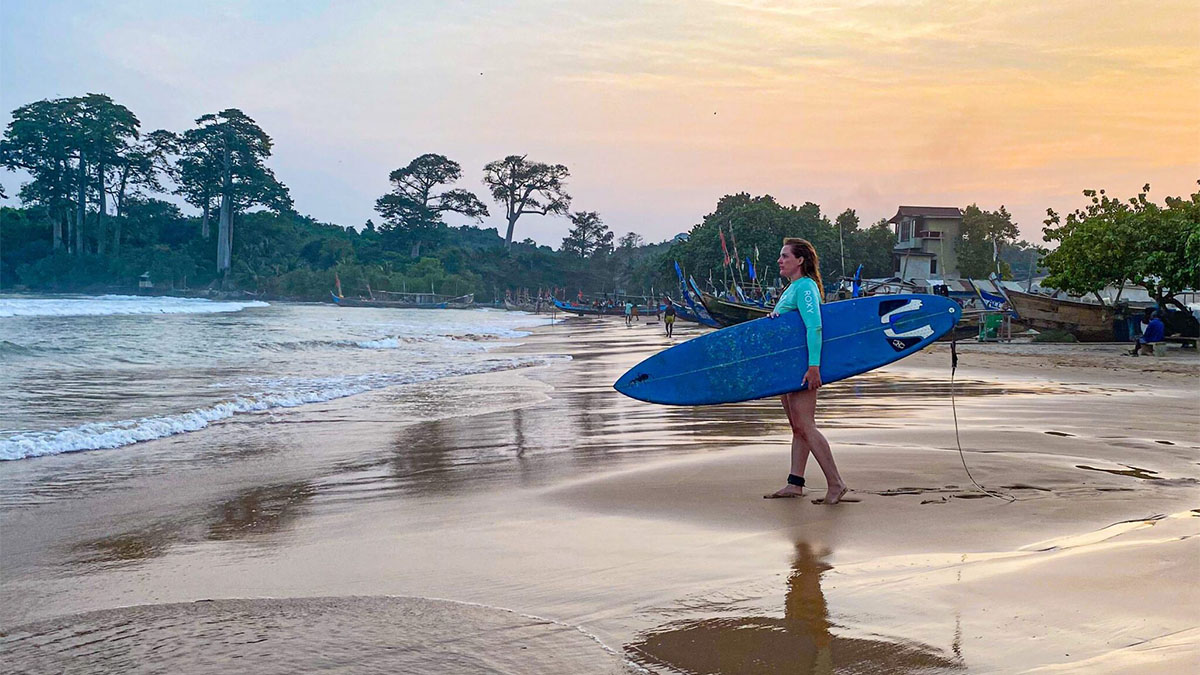
The Vibe: Busua Beach & Surf Culture
If you follow the coastline back east, you will find
Busua Beach, a sweeping crescent of golden sand that has quietly established
itself as the undisputed capital of Ghana’s growing surf culture.
Unlike the busier city beaches, Busua offers a
remarkably laid-back, bohemian atmosphere. Local outfits like the Ahanta Surf
School have turned the town into a global meeting point for surfers. The waves
here are exceptionally consistent and welcoming to both beginners and seasoned
pros. When the sun goes down, the beachfront comes alive with the sound of
crackling bonfires, fresh lobster grilling over open coals, and reggae music
drifting through the coconut trees.
The Luxury: Secluded Eco-Resorts
The Western Region has mastered a very specific type
of tourism: low-impact, high-end eco-luxury. Travelers looking to unplug
without sacrificing comfort head straight to hidden sanctuaries like Lou Moon
Resort near Dixcove.
Tucked into a private, natural cove and surrounded by
dense jungle on three sides, these resorts feel like a world of their own. You
can spend your morning paddleboarding in a calm, sapphire-blue private bay,
your afternoon hiking through the nearby forest, and your evening enjoying
gourmet Ghanaian-fusion dining right on the water's edge. It proves that
traveling to the rugged edge of the continent can still mean infinity pools and
world-class hospitality.
Traveler’s Quick Logistics
Getting There:
The easiest way to access the region is to take a quick, 40-minute domestic
flight from Accra (ACC) to Takoradi Airport (TKD) via local carriers like
Africa World Airlines or Passion Air. Alternatively, it's a scenic 4-to-5-hour
drive from Accra along the coastal highway.
Best Time to Visit:
November to March marks the dry season, offering beautiful beach weather and
lower humidity. (For a trip contact the writer at despitetravels@gmail.com).
Nearby Add-on:
If you love deep wilderness, don't miss the Ankasa Conservation Area—Ghana's
only pristine, wet evergreen rainforest, located right on the border with Ivory
Coast.
Written by: Seth Ameyaw Danquah