

News Detail
TUI Policy Lounge: Travel Trends with Arjan Kers
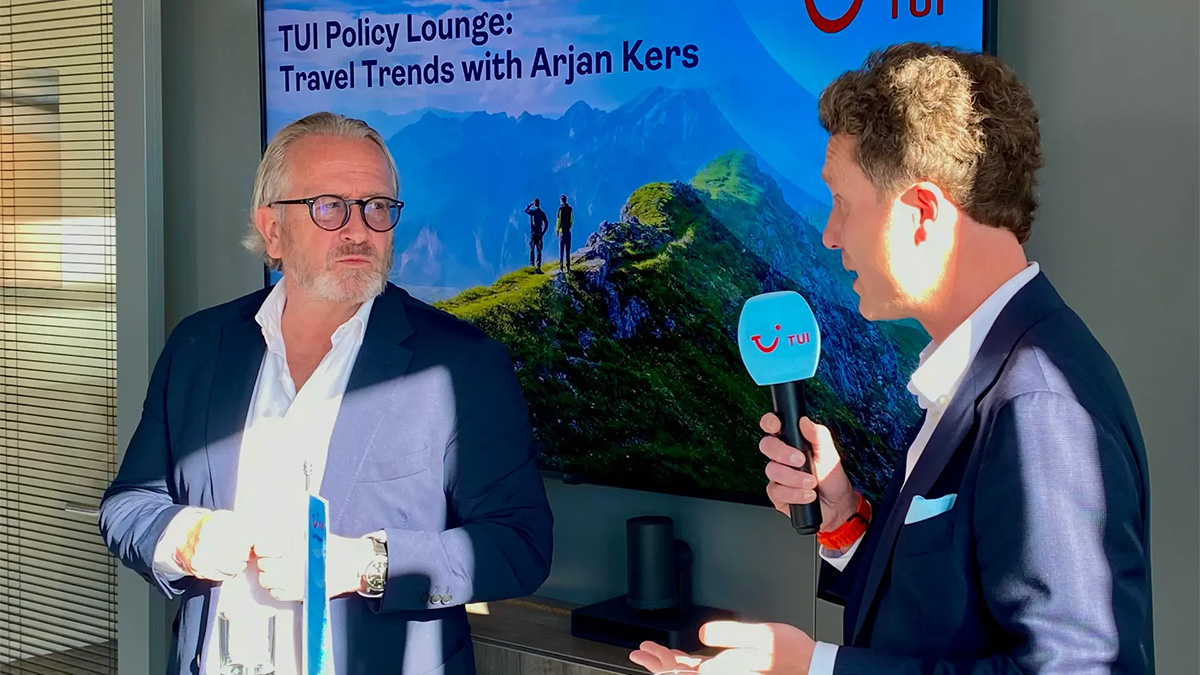
From shifting booking patterns to regulatory pressures shaping Europe’s tourism future, travel trends took centre stage at TUI’s Policy Lounge event in Brussels.
The event brought together more than 30
representatives from the European institutions and the travel and policy
ecosystem, for an open discussion with Arjan Kers, Managing Director of TUI in
Belgium and the Netherlands, and President of the Dutch travel association
ANVR. Held at the TUI Group Corporate Office EU, the dialogue highlighted how
the industry is evolving, what customers are looking for, and what policymakers
need to keep in mind to support a competitive, resilient and sustainable travel
sector.
Why Package Travel Still Matters?
Drawing on over three decades of experience, Arjan
emphasised that while the world and the economic situation has become more
volatile, the fundamental desire to travel remains strong. He noted that
tourism has always been cyclical. In this context, he emphasised the continued
relevance of package holidays, which deliver a reliable customer experience,
peace of mind, and strong customer protection.
“Package holidays may sound old-fashioned, but in
crisis situations it is the most secure option for customers,” he said. “When
something happens, it is the tour operator’s responsibility to bring people
home – and that makes a real difference.”
These moments of disruption, he noted, underline the
value of package travel.
Built for Crisis and Future Demand
Recent global events once again stressed the
importance of preparedness and coordination in the travel sector. In March
alone, TUI supported the repatriation of around 10,000 customers following
disruptions in the Middle East and beyond. Despite the difficult situation, TUI
managed to organise special repatriation flights with its own airline and with
partner airlines in a short period.
“In a crisis, coordination between governments,
operators and local authorities is essential – this is the only way to bring
people home quickly,” Kers stated. “TUI has a dedicated crisis team that stands
ready 24/7 for any eventualities, and the priority is always clear: the safety
of our customers comes first.”
These situations underline the scale, responsibility,
and operational capacity required to respond effectively when disruptions
occur. Arjan underlined that despite all challenges, the desire to travel
continues to grow, with demand returning stronger than before the pandemic and
younger generations prioritising work-life balance and experiences.
Harmonising Regulation for Global Edge
The dialogue then addressed the European travel
sector’s capacity to remain competitive on the global scale. Kers warned
against a fragmented approach to tourism regulation and policy, describing a
“patchwork of rules” across Europe that makes it difficult to run a business,
creates distortions within Europe and makes the European travel sector less
competitive. He stressed that regulation is important, but it must be aligned
across countries to prevent distortions that undermine the sector.
He highlighted in particular how distinct national tax
policies directly impact consumer behaviour and local economies. For instance,
high departure taxes at Amsterdam Airport drive Dutch passengers to cross the
borders and fly from Brussels or Dusseldorf instead. While household budgets
are under pressure, people still want to travel and will consequently look for
the best deals across borders. A healthy tourism needs a level playing field
across Europe. Ideally any such taxes should be removed as they do not improve
the environment and merely cause unnatural customer behaviour.
“We don’t need to compete between European countries –
we need more alignment if we want a strong tourism sector,” said Kers.
Call to Policymakers
The overreaching message was clear: policymakers
should focus on the benefits tourism delivers to the economy and to society,
through proportionate and less fragmented regulation. Package holidays are more
relevant than ever as the safest way to travel and TUI is well positioned to
deliver on the promise of a care-free holiday. Protection does come at a cost,
and policymakers should make sure that package holidays remain competitive in
the market.